
As we move into our 30s, many people begin to notice subtle changes in their bodies — energy levels may fluctuate, maintaining weight becomes more challenging, and recovery from daily stress or physical activity may take longer than before. These changes are often gradual and easy to overlook, but they are closely linked to metabolic health.
Understanding metabolic health after 30 is essential because this is the stage where lifestyle habits begin to have a more significant and lasting impact. Rather than focusing on quick fixes, this phase of life calls for a more balanced and sustainable approach to overall well-being.
What Changes in Your Metabolism After 30?
Metabolism does not suddenly slow down at a specific age, but it does evolve over time. After 30, several factors may influence how efficiently your body uses energy:
- Gradual reduction in muscle mass
- Changes in hormonal balance
- Increased impact of stress on the body
- More sedentary routines due to work and lifestyle
These changes can affect how the body regulates energy, stores fat, and responds to food and activity. As a result, maintaining metabolic balance may require more conscious lifestyle choices than before.
Common Signs of Metabolic Changes After 30
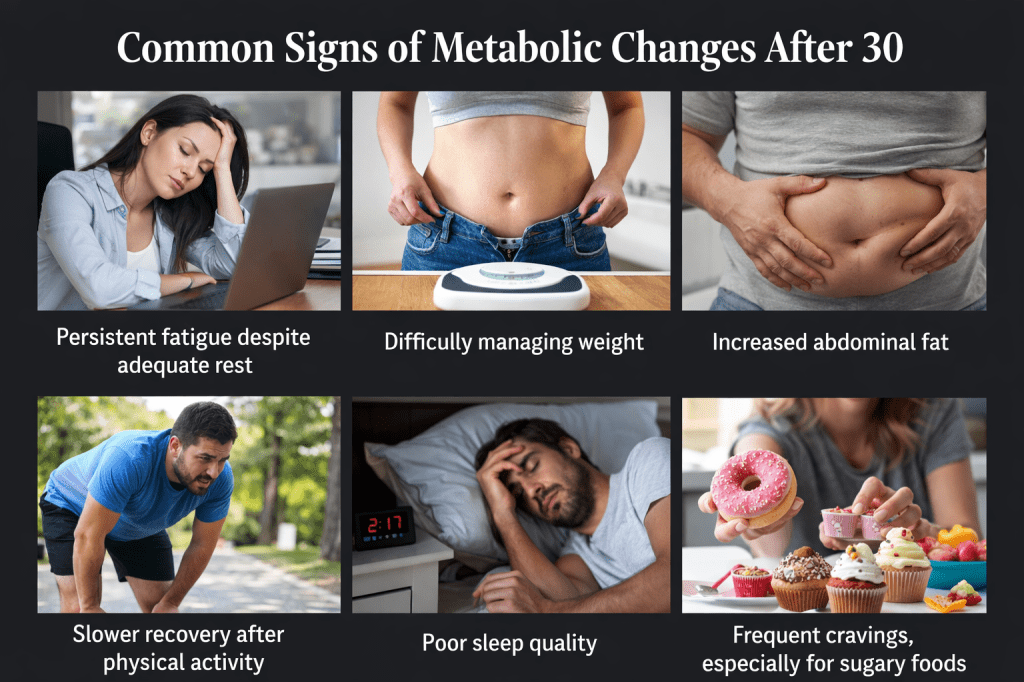
Many people experience early signs of metabolic shifts without realizing their significance. These may include:
- Persistent fatigue despite adequate rest
- Difficulty managing weight
- Increased abdominal fat
- Slower recovery after physical activity
- Poor sleep quality
- Frequent cravings, especially for sugary foods
These signs do not necessarily indicate a medical condition, but they may reflect that the body’s metabolic processes are under strain.
Why Lifestyle Matters More After 30
In earlier years, the body may compensate for irregular habits such as poor sleep, inconsistent meals, or lack of activity. However, after 30, these patterns tend to have a more noticeable impact.
Lifestyle factors such as nutrition, movement, sleep, and stress begin to play a more central role in metabolic health. Small imbalances, if ignored, can gradually influence energy levels, weight patterns, and overall well-being.
This is why consistency becomes more important than intensity.
Key Lifestyle Factors That Influence Metabolic Health
Nutrition
Regular, balanced meals support steady energy levels and help maintain metabolic stability. Irregular eating patterns or highly processed diets may disrupt this balance.
Physical Activity
Daily movement supports muscle health and energy regulation. This does not necessarily require intense workouts — consistency is more important than intensity.
Sleep
Quality sleep is essential for hormonal balance and recovery. Poor sleep can affect appetite, energy levels, and overall metabolic function.
Stress
Chronic stress can disrupt metabolic processes by affecting hormone regulation, particularly those related to energy and appetite.
How to Improve Metabolic Health After 30
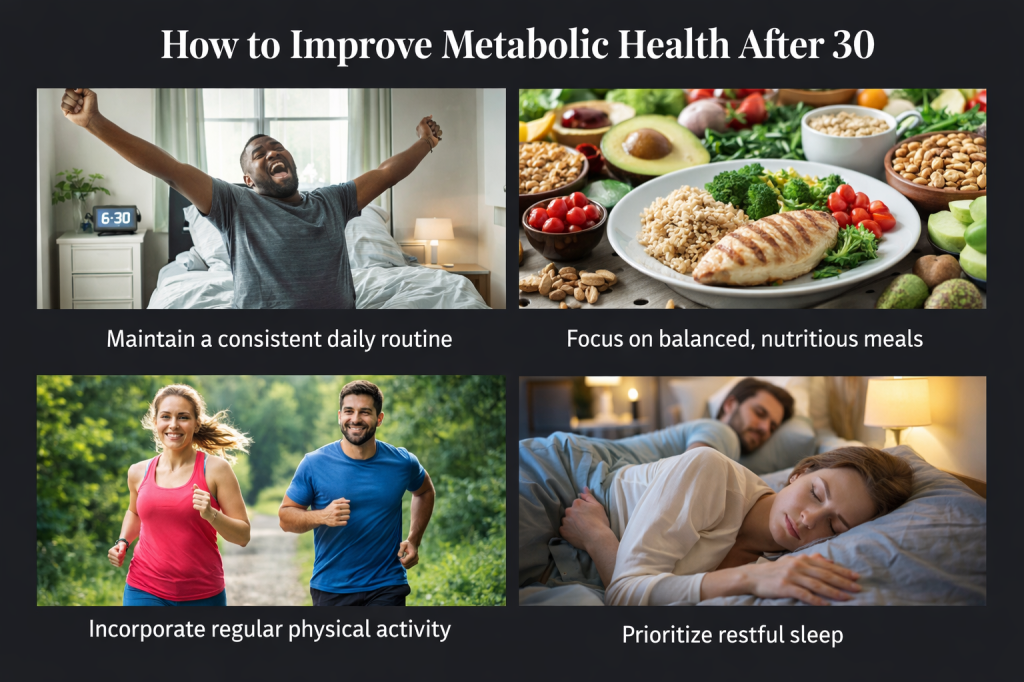
Supporting metabolic health after 30 involves simple, sustainable lifestyle adjustments:
- Maintain a consistent daily routine
- Focus on balanced, nutritious meals
- Incorporate regular physical activity
- Prioritize restful sleep
- Practice effective stress management
These steps do not need to be perfect. Small, consistent improvements can lead to meaningful long-term benefits.
Why a Personalised Approach Becomes Important
Each individual’s metabolism responds differently to lifestyle factors. What works well for one person may not be as effective for another.
A personalized approach considers:
- Daily routines and work patterns
- Stress levels and sleep qualityConclusion
- Nutrition habits
- Individual metabolic responses
At Nightingale Metabolic Clinic, we focus on understanding these individual differences to provide tailored metabolic care that supports sustainable and realistic lifestyle changes.
Conclusion
Metabolic changes after 30 are a natural part of life, but they should not be ignored. This stage presents an opportunity to build healthier habits that support long-term well-being.
By focusing on consistency, understanding your body’s needs, and making informed lifestyle choices, it is possible to maintain balanced energy, improved resilience, and sustainable health.
At Nightingale Metabolic Clinic, we support lasting metabolic balance through advanced diagnostics, personalized nutrition, stress management, and sustainable lifestyle strategies.
Frequently Asked Questions
Is it normal for metabolism to slow down after 30?
Metabolism changes gradually with age and lifestyle factors, which may affect energy levels and weight management.
Can lifestyle changes improve metabolic health after 30?
Consistent lifestyle habits such as balanced nutrition, regular movement, and quality sleep can support metabolic balance.
Why is it harder to manage weight after 30?
Changes in metabolism, activity levels, and daily routines may influence how the body stores and uses energy.
Reviewed by:
Dr. Samith Ghosal, MD
Clinical Lead – Metabolic & Lifestyle Medicine
Nightingale Metabolic Clinic, Nightingale Hospital
Medical Disclaimer
This article is for educational purposes only and does not replace professional medical advice, diagnosis, or treatment. Always consult a qualified healthcare provider for personalised guidance.

Leave a comment